 +662-105-4288
 1800 789 560


Does Medicare or Private Health Insurance Cover Dental Implants in Australia?
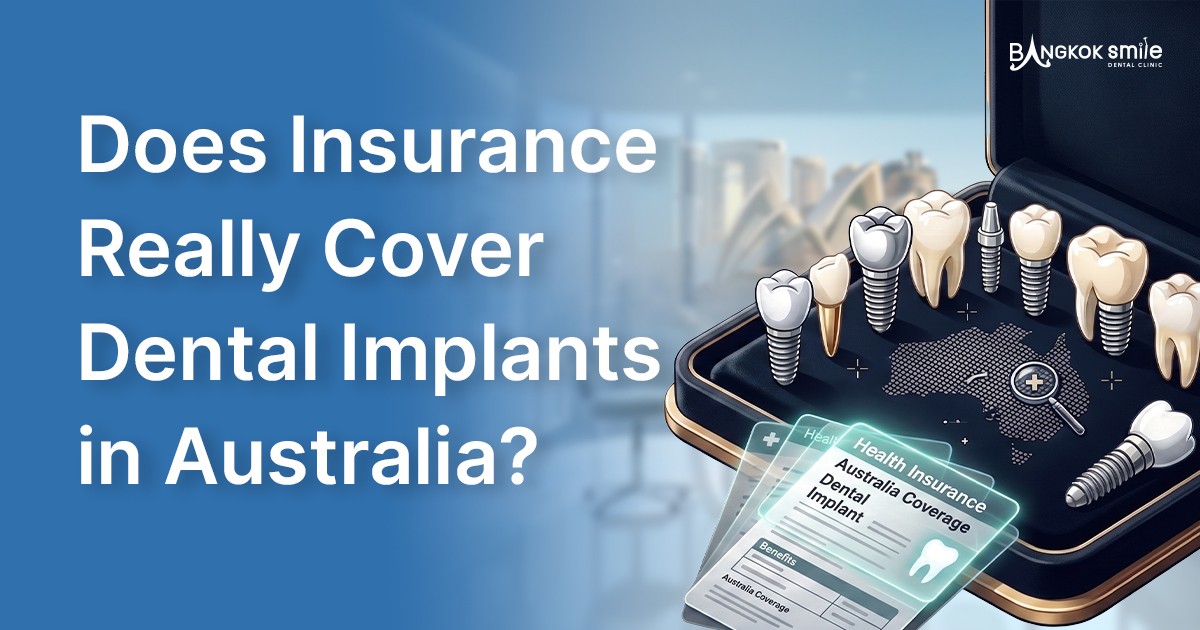
It is one of the most common questions Australians ask their dentist after receiving a treatment plan for implants: 'Will Medicare cover this?' or 'Surely my health fund will pay for at least part of it?' The answers are complicated — and usually disappointing. Understanding exactly what is and is not covered can help you make informed decisions about how to fund your dental treatment.
Does Medicare Cover Dental Implants?
The short answer is: almost never. Medicare in Australia is primarily designed to cover GP visits, specialist consultations, and hospital procedures. Dental care — with a few narrow exceptions — sits entirely outside the Medicare Benefits Schedule.
The exceptions include:
- Certain oral surgery procedures performed in a hospital setting (such as removal of impacted wisdom teeth under general anesthesia) may attract a partial Medicare rebate through the MBS item numbers for surgical procedures.
- Reconstructive jaw surgery (orthognathic surgery) may be partially covered if it is deemed medically necessary.
- Dental care required as part of a Medicare-covered hospital admission may be covered in some limited circumstances.
Dental implants themselves — the titanium posts, the abutments, and the crowns that replace missing teeth — are not covered by Medicare under any standard circumstances. They are classified as elective dental treatment, not medical necessity under current Australian health policy.
What About Private Health Insurance?
Private health insurance in Australia operates through 'extras' or 'ancillary' cover. Most policies with dental extras offer two tiers: general dental and major dental.
General Dental Cover
General dental typically covers preventive and basic treatments: check-ups, cleans, X-rays, fillings, and extractions. Annual limits usually range from $300 to $600 per person. This covers the routine maintenance of your teeth but does not apply to implants, crowns, or dentures.
Major Dental Cover
Major dental is where implants theoretically might attract a rebate. However, the reality is complicated by several factors:
- Waiting periods: Most policies require you to have held major dental cover for 12 months before you can claim. Some policies impose a 2-year waiting period for implants specifically.
- Annual limits: Annual major dental limits typically range from $1,000 to $3,000 per person. Given that a single implant costs $4,500–$7,000, this barely covers a fraction of one implant, let alone a full-mouth case.
- Exclusions: Some funds explicitly exclude implants or classify them as 'elective' treatments not covered under their schedule.
- Benefit percentages: Even within covered categories, funds typically pay 60–80% of their 'schedule fee' — which is usually lower than the dentist's actual fee. So a $6,000 implant might attract a rebate of $800–$1,500 at best.
-
The Practical Reality for Australians Needing Implants
Let us put this in concrete terms. A patient needing:
- 2 dental implants at $5,500 each = $11,000 total
- Maximum annual major dental limit: $2,000
- Less 12-month waiting period (during which condition may worsen)
- Net out-of-pocket even with insurance: $9,000+
-
For full-mouth All-on-4 treatment at $40,000–$60,000 per arch, private health insurance provides a token contribution at best. Most Australians who need significant implant work find they are self-funding the majority of the cost regardless of their insurance status.
Industry data consistently shows that fewer than 15% of Australian patients with major dental needs receive meaningful insurance reimbursement. The gap between need and coverage is enormous.
Coverage for Veterans
The Department of Veterans' Affairs provides eligible veterans, war widows, and war widowers with comprehensive dental coverage under the Veterans' Dental Program. Gold Card holders receive full dental benefits including crowns, bridges, dentures, and in some cases implants. White Card holders receive coverage for dental conditions related to their accepted service conditions. If you are eligible for DVA benefits, this can be genuinely comprehensive — speak with your DVA-affiliated dentist for details.
Public Dental Services
State and territory governments operate public dental services for eligible low-income Australians, pensioners, and concession card holders. These services cover basic and emergency dental care, but waiting times of minimum 2 years are common in most states. Complex restorative work like implants is rarely — if ever — available through the public system.
So What Are Your Real Options?
Given the limitations of Medicare and private health insurance, Australians who need implants or major restorative work essentially have four realistic pathways:
- Pay the full Australian price out-of-pocket — feasible for higher-income earners but financially devastating for most families.
- Use payment plans (Afterpay, ZipPay, Denticare) — spreads the cost but does not reduce the overall price. Can lead to significant debt for major procedures.
- Access government programs — viable for veterans, eligible children, and public dental waitlist candidates, but not applicable for most working-age Australians needing major work.
- Travel overseas for dental tourism — increasingly the chosen path for Australians who need significant treatment. Countries like Thailand offer the same materials, same implant brands, and comparable specialist qualifications at 60–75% lower cost.
-
Can You Claim Insurance for Overseas Dental Treatment?
This is a question many Australians ask before booking a dental trip abroad. Some Australian health funds will provide a partial rebate for dental procedures performed overseas, provided the treatment falls within a covered category and you provide appropriate documentation (itemized receipts, dental records, X-rays). The rebate is typically modest — calculated on the fund's Australian schedule fee, not the overseas cost — but it may partially offset your travel expenses. Check with your specific fund before travelling.
The Bottom Line on Insurance and Implants
Medicare does not cover dental implants. Private health insurance covers a small fraction of implant costs, with significant waiting periods and annual limits that are far below the cost of treatment. Veterans with DVA Gold Cards are the main exception to this picture.
For the majority of Australians facing significant implant needs, the financial support system is simply not there. This is why dental tourism has become a mainstream choice — not a last resort, but a strategically sound financial decision that allows people to access the care they need at a price that is actually achievable.
Bangkok Smile Dental Clinic has helped thousands of Australians navigate exactly this situation. Their free online consultation service allows you to get a treatment plan and cost estimate before you commit to anything — and their Australian toll-free line (1800 789 560) means help is always a local call away.
Ready to Save on World-Class Dental Care?
Bangkok Smile Dental Clinic has been serving international patients — including thousands of Australians — since 2003. With 14 branches across Bangkok and Phuket, Nobel Biocare and Straumann implant systems, ISO 9001-certified quality, and an Australian toll-free line (1800 789 560), we make your dental journey safe, seamless, and significantly more affordable.
Book your free online consultation today: www.bangkoksmiledental.com | AU Free Call: 1800 789 560