 +662-105-4288
 1800 789 560


A Guide to Dental Health: Foods That Protect vs. Foods That Damage
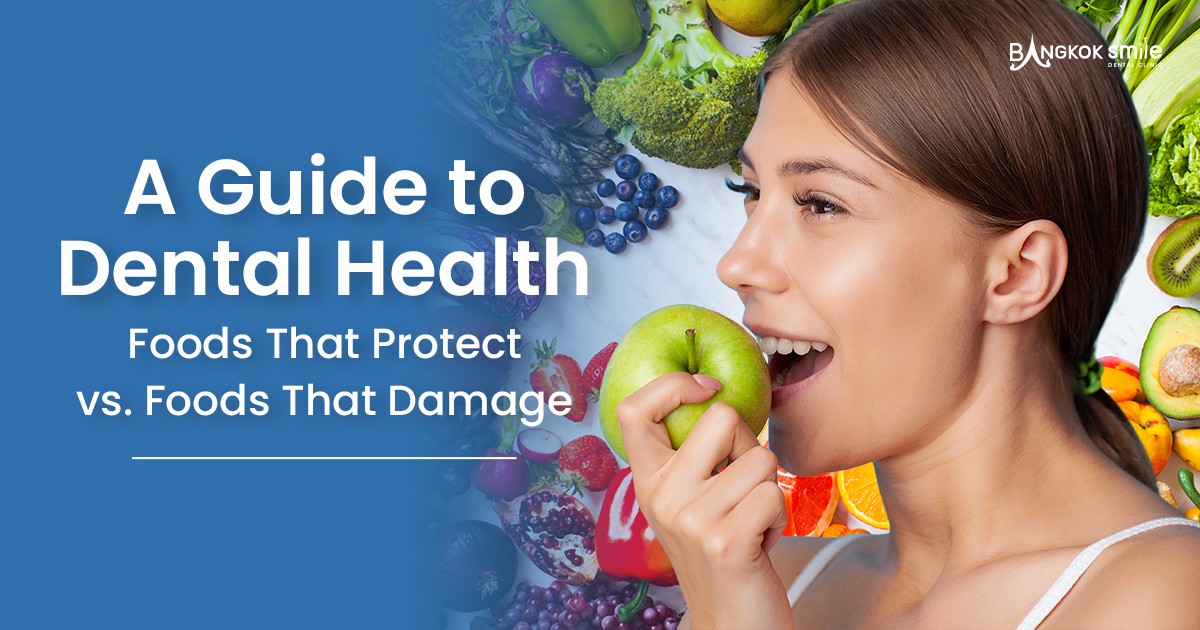
Maintaining a healthy smile involves more than just regular brushing. The food and drinks we consume daily play a significant role in either strengthening or weakening our enamel (the protective outer layer of the teeth).
Here is a practical guide to help you choose the best options for your dental health.
Foods to Consume with Caution
These items can contribute to tooth decay and acid erosion if consumed frequently:
-
Sticky Sweets and Dried Fruits: Lollies like gummies or caramels, and even healthy-sounding snacks like dried apricots, tend to stick in the grooves of your teeth. This allows bacteria to produce acid over a longer period, increasing the risk of cavities.
-
Acidic and Fizzy Drinks: Soft drinks, sports drinks, and even sparkling water with citrus can be highly acidic. This acid gradually dissolves the minerals in your enamel, leading to tooth sensitivity and a yellowing appearance.
-
Hard Substances: Habitually chewing on ice or very hard nuts can cause "micro-fractures" in your teeth. Over time, these small cracks can lead to more serious dental issues, such as chipped or broken teeth.
Foods That Support Dental Health
Incorporating these into your diet can act as a natural defencse system for your teeth:
-
Dairy Products (Cheese, Yoghurt, and Milk): Rich in calcium and phosphate, dairy helps repair enamel through a process called remineraliszation. Eating a small piece of cheese after a meal can also help neutralise harmful acids in the mouth.
-
Fibrous Vegetables and Fruits: Crunchy options like carrots, apples, and celery require more chewing, which stimulates saliva production. Saliva is the body's natural rinse, helping to clear away food debris and buffer acid.
-
Fluoridated Tap Water: In Australia, drinking tap water is one of the easiest ways to protect your teeth. The added fluoride helps harden the enamel, making it more resistant to decay.
Simple Habits for a Healthier Smile
-
Rinse with Water: If you cannot brush immediately after a meal, rinsing your mouth with plain water helps remove sugars and acids.
-
The 30-Minute Rule: Avoid brushing your teeth immediately after consuming acidic foods or drinks. Wait at least 30 minutes to allow the enamel to re-harden, preventing you from accidentally scrubbing away the softened surface.
Opt for Sugar-Free Gum: Chewing gum containing xXylitol after meals can help reduce plaque-forming bacteria and keep your mouth hydrated.