 +662-105-4288
 1800 789 560



Brushing Alone Isn’t Enough?
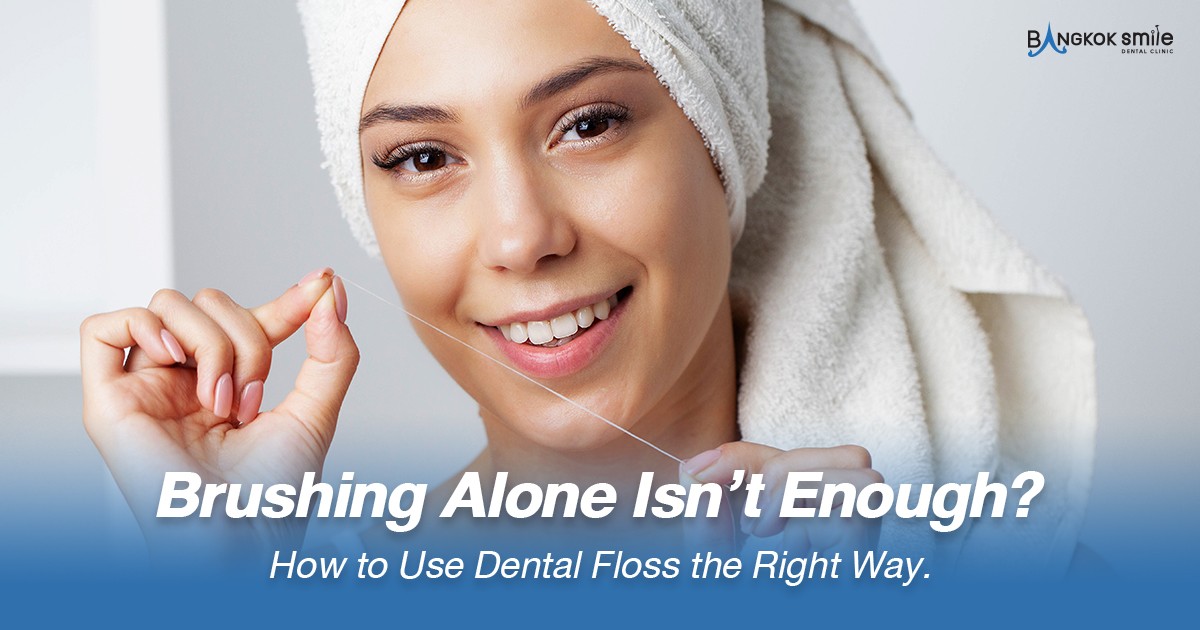
How to Use Dental Floss the Right Way
for a Healthier, More Confident Smile
Ever wondered why
You brush your teeth twice a day without fail,
but your dentist still tells you there’s tartar buildup
or hidden cavities between your teeth?
The simple answer many people overlook is this:
your toothbrush can’t reach every area of your teeth.
Today, let’s talk about why dental floss is a must have,
and walk you through the correct way to use it step by step
so your smile can be truly clean and healthy.
Why Isn’t Brushing Alone Enough?
Only roughly 60% of your tooth surfaces can be cleaned with the best toothbrush on the planet. Your toothbrush is unable to reach the remaining 40% of the space between your teeth.
Food particles and plaque tend to hide in these small places.
If left untouched, plaque hardens into tartar and can lead to:
-
Gum inflammation
-
Bad breath
-
Cavities between teeth (which are harder to treat)
That’s where floss comes in.
5 Easy Steps to Use Dental Floss Properly
Flossing isn’t difficult, it just takes a bit of technique to do it effectively and gently.
1. Use the Right Length Pull out about 12–18 inches (30–45 cm) of floss. Wrap the ends around your middle fingers, leaving 1–2 inches in between to work with.
2. Hold It Steady Use your thumbs and index fingers to keep the floss tight, so you can guide it smoothly between your teeth.
3. Slide Gently Don’t Force It Move the floss back and forth gently (like a sawing motion) to slide it between your teeth. Avoid snapping the floss straight down, this can hurt your gums and cause bleeding.
4. Make a “C” Shape Once the floss reaches the gumline, curve it around the side of the tooth into a C-shape. Gently move it up and down to remove plaque under the gum edge.
5. Use a Clean Section Each Time When moving to the next tooth, unwind fresh floss so you’re not spreading bacteria from one tooth to another.
Frequently Asked Questions About Flossing
Should I floss before or after brushing? Before brushing is best. Flossing first removes food debris and helps fluoride from your toothpaste reach between your teeth more effectively.
Is it normal if my gums bleed when I floss?
A little bleeding is common when you first start flossing, especially if your gums are inflamed or not used to it. If you floss gently and consistently, bleeding usually stops within 1–2 weeks.
If it doesn’t, it’s best to check in with your dentist.
Are floss picks as good as regular floss?
Floss picks are convenient and beginner-friendly. However, they don’t always allow the same control to wrap around the tooth in a C-shape
as well as traditional string floss. Both work consistency matters most.
Final Thoughts: A Small Habit That Makes a Big Difference
Spending just 2–3 extra minutes a day, especially before bed, can save you a lot on dental treatments in the future. More importantly, flossing helps protect your natural teeth
and keeps your smile healthy for years to come.