 +662-105-4288
 1800 789 560



How Much Tooth Structure Is Needed Before a Crown?
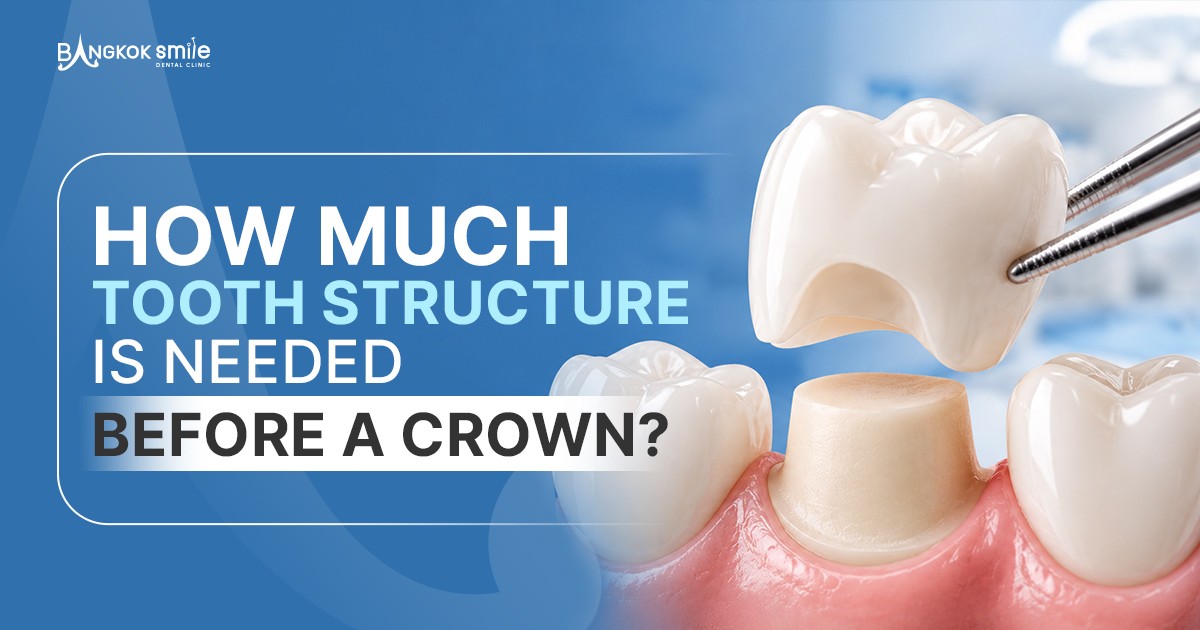
How much of your natural tooth actually gets removed for a crown? Patients are sometimesuneasy learning that crown preparation involves removing a layer of their natural tooth structure,even though the tooth being treated may already be damaged or weakened. This reaction isunderstandable, but it's worth understanding why this step is necessary, how much structure isactually involved, and what options exist when a tooth has already lost more structure than idealbefore the crown process even begins.
Why Preparation Removes Healthy Structure, Not Just DamagedTissue
A crown needs to fit overthe tooth with a specific, uniform thickness of material covering it,regardless of which material is chosen. To create the space for this covering, the tooth itselfneeds to be reduced slightly on all sides, typically by an amount measured in fractions ofamillimeter depending on the specific material and location, removing some structure that may beentirely healthy in addition to addressing whatever decay, fracture, or previous filling brought thepatient to treatment in the first place. This isn't an oversight or unnecessary step; it's a structuralrequirement of how crowns function, providing a uniform thickness of protective material aroundthe tooth.
How Much Structure Is Typically Removed
The exact amount varies depending on the material selected and the location of the tooth.
In general, dentists remove approximately 0.5–1.5 mm of tooth structure from each surface, while the chewing surface usually requires slightly more reduction because it must withstand greater biting forces.
| Tooth Area | Typical Preparation |
|---|
| Side surfaces | Approximately 0.5–1.5 mm |
| Chewing surface | Slightly more reduction for strength |
| Zirconia crowns | May allow slightly more conservative preparation because of the material's high strength |
Every case is different. The dentist will always aim to preserve as much healthy tooth structure as possible while ensuring there is enough space for the crown to function correctly.
What Happens When a Tooth Doesn't Have Enough Structure to BeginWith
This is where the more significant clinical decisions come in. A tooth that's already lostsubstantial structure to decay, a previous large filling, or fracture may not have enoughremaining material after standard preparation to provide adequate retention, the mechanical gripthat keeps a crownsecurely attached to the tooth underneath. In these cases, a fewapproaches address the gap:
- Build-up material. A composite or other restorative material can be added to rebuildmissing tooth structure before the crown preparation proceeds, effectively recreating afoundation closer to the tooth's original shape that the crown can then be properly fittedonto.
- A post and core. For teeth that have had root canal treatment and lost significantstructure, a post placed into the root canal space, combined witha core material built uparound it, creates a stable foundation when the natural remaining tooth structure alonewouldn't provide sufficient retention for the crown.
- Crown lengthening. In some cases, the issue isn't a lack of tooth structure overall butrather that too little of the existing structure is exposed above the gumline for the crownto grip properly. A minor surgical procedure called crown lengthening, adjusting the gumand sometimes a small amount of underlying bone, exposes more of the existing healthytooth structure, providing the crown with adequate surface to attach to.
Why This Assessment Happens Before, Not During, Treatment
We assess how much structure remains, and what additional steps might be needed, during the initial examination and X-ray review, before committing to a specific treatment plan or timeline. Discovering mid-procedure that a tooth needs a post and core or crown lengthening that wasn't anticipated creates unnecessary complications and delays, which is why a thorough pretreatment assessment, including imaging that shows structure below the gumline that isn't visible during a simple visual exam, is a standard part of how we plan crown treatment.
What This Means for Treatment Timeline
A straightforward crown case, where adequate structure already exists, typically moves directly from preparation to fitting the crown, sometimes completed in a single visit using our same-day CAD-CAM technology. A case requiring a build-up, post and core, or crown lengthening first generally needs an additional appointment or healing period before the final crown preparation and fitting can proceed, since these preliminary steps need to be completed and, in the case of crown lengthening, allowed to heal, before the crown preparation itself makes sense.
What to Expect During Your Consultation
If you're being evaluated for a crown, expect us to discuss not just whether a crown is the right restoration, but specifically how much of your natural tooth structure remains and whether any additional preparatory step is needed before the crown itself can be properly fitted. This level of detail upfront, rather than discovering a need for additional treatment partway through the process, is what lets us give you an accurate timeline and treatment plan from the outset, particularly important for international patients planning the number of days needed for their visit to Bangkok.
How Digital Scanning Has Changed This Process
Traditional crown preparation relied on a physical impression, a mold taken using a putty-like material, which some patients find uncomfortable and which carries some risk of minor inaccuracy depending on technique and material handling. Our use of digital scanning technology, the same system behind our same-day CAD-CAM crowns, replaces this step with a quick digital scan of the prepared tooth, generally more comfortable for the patient and producing a highly precise three-dimensional model that the crown is then designed from directly. This precision matters specifically for the preparation question discussed above, since an accurate digital model lets us, and the software assisting the design process, identify exactly how much structure remains and confirm that a planned crown will have adequate retention before fabrication even begins, catching potential issues earlier than a physical impression might reveal.
What If You're Unsure Whether Your Tooth Has Enough Remaining Structure
If you've had previous large fillings or treatment on a tooth now being considered for a crown and you're unsure whether additional preparatory work might be needed, this is exactly the kind of question worth raising directly during your consultation. We'd rather identify this upfront through proper examination and imaging than have you discover mid-treatment that additional steps are required that weren't part of the original plan or estimate. This is especially relevant if you're traveling specifically for treatment, since an unexpected need for a build-up or crown lengthening discovered only after arriving can disrupt a tightly planned trip itinerary in a way that's avoidable with thorough imaging review beforehand, which is exactly why we ask for any existing X-rays well in advance whenever possible.
Putting This Into Context for Your Own Treatment Plan
If you're scheduled for a crown and haven't yet discussed how much preparation your specific tooth will require, this is a reasonable question to raise directly, particularly if you're aware that the tooth in question has a significant history, a large previous filling, an old root canal, or a fracture that brought you to treatment in the first place. Understanding whether your case is the straightforward type, moving directly from preparation to a same-day crown, or whether it involves an additional preliminary step, helps you plan your visit, your timeline, and your budget with realistic expectations from the very beginning rather than discovering additional complexity only once treatment is already underway. Click to Book Now