 +662-105-4288
 1800 789 560


Can Smokers Get Dental Implants?
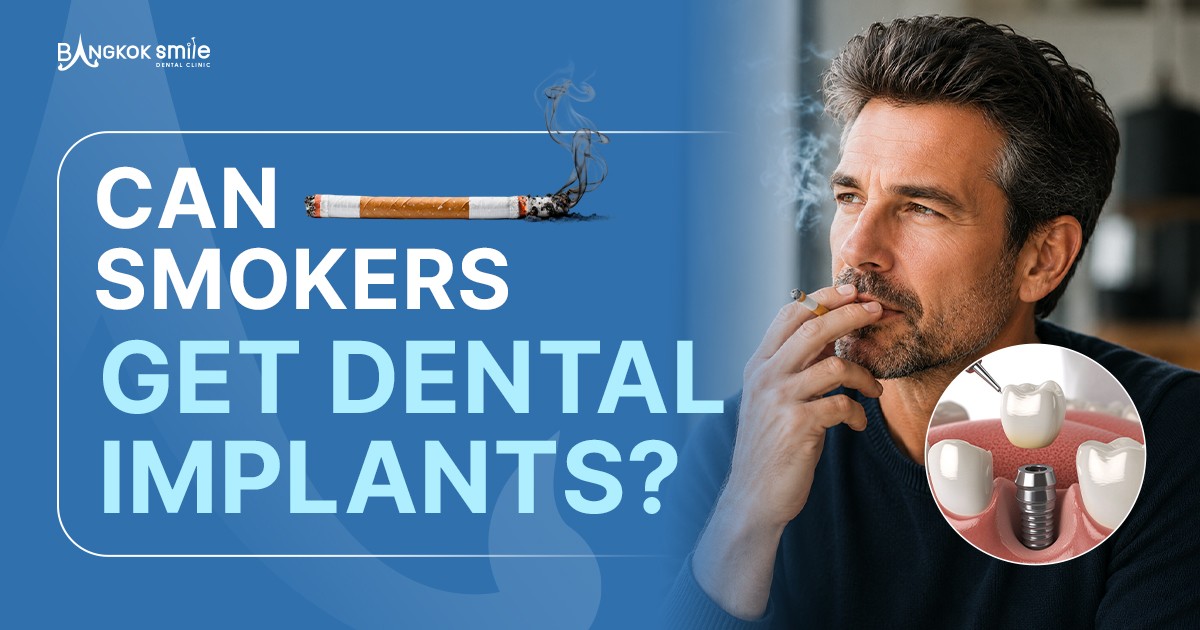
Can smokers get dental implants, or is that off the table? Smoking and dental implants is a topic surrounded by mixed messaging, with some sources implying smokers simply can't get implants and others downplaying the risk entirely. The honest answer sits between these: smokers can get dental implants, but smoking measurably increases the risk of complications and failure. Being straightforward about this risk, rather than ignoring or exaggerating it, is what allows a smoker to make an informed decision and take steps to improve their odds.
Why Does Smoking Affect Dental Implant Success?
Dental implants rely on a natural healing process called osseointegration, where the implant fuses with the jawbone to create a stable foundation for the replacement tooth.
Smoking interferes with this process in several ways. Nicotine constricts blood vessels, reducing blood flow to the gums and surrounding bone. As a result, healing tissues receive less oxygen and fewer nutrients, slowing recovery after surgery.
In addition, the chemicals found in tobacco smoke can impair the body's immune response and interfere with the cells responsible for tissue repair. This makes it more difficult for the implant to integrate with the bone and increases the risk of infection.
How Much Does Smoking Increase the Risk?
Research consistently shows that smokers experience higher rates of implant complications than non-smokers.
Smoking is associated with:
- Delayed healing after implant surgery
- Higher risk of implant failure
- Increased likelihood of peri-implantitis (infection around dental implants)
- Greater risk of long-term bone loss around the implant
However, a higher risk does not mean that treatment is destined to fail.
Many smokers enjoy successful, long-lasting dental implants, especially when they follow professional recommendations and maintain excellent oral hygiene.
Why Don't Dentists Automatically Refuse Smokers?
Every patient is different. Rather than applying a blanket policy, most implant dentists evaluate each patient individually.
Factors that influence treatment planning include:
- How much and how often you smoke
- The health of your gums
- Jawbone quality and density
- Existing medical conditions
- Your willingness to reduce or stop smoking during treatment
A personalised assessment allows your dentist to balance potential risks with the benefits of treatment and recommend the most appropriate approach for your situation.
The Most Effective Way to Improve Implant Success
The single most important step a smoker can take is to stop smoking—particularly during the critical healing period before and after implant surgery.
Even temporary smoking cessation can significantly improve blood circulation, support faster healing, and increase the chances of successful osseointegration.
While quitting permanently provides the greatest health benefits, avoiding smoking during the surgical and healing phases alone can make a meaningful difference to your implant outcome.
Does Heavy Smoking Carry Greater Risks?
Generally, yes. People who smoke heavily tend to face a greater risk of implant complications than occasional smokers.
However, there is no universal "safe" number of cigarettes per day.
Your dentist will consider your smoking habits alongside other health factors to determine your individual level of risk and develop the most appropriate treatment plan.
Caring for Dental Implants as a Smoker
Successful treatment doesn't end after implant placement. Smokers remain at a higher risk of developing peri-implant disease throughout the lifetime of their implant, making long-term maintenance especially important.
Good habits include:
- Brushing twice daily
- Cleaning between the teeth every day
- Attending regular dental check-ups
- Having professional cleanings as recommended
- Seeking prompt treatment if you notice bleeding gums, swelling, or discomfort around the implant
Consistent maintenance is one of the best ways to protect your investment in dental implants.
What About Vaping?
Many people assume vaping is a safer alternative to smoking.
While vaping may expose users to fewer harmful chemicals than traditional cigarettes, nicotine can still reduce blood flow and interfere with wound healing.
Because long-term evidence is still developing, most implant dentists recommend avoiding vaping during the healing period, just as they recommend avoiding traditional smoking.
Why It's Important to Be Honest with Your Dentist
Some patients hesitate to tell their dentist that they smoke, worrying it may prevent them from receiving treatment.
In reality, being honest helps your dentist create a safer and more predictable treatment plan.
Knowing your smoking habits allows your dental team to assess your risk accurately, recommend strategies to improve healing, and provide realistic expectations for your treatment outcome.
The goal is never to judge patients—it's to help achieve the best possible long-term result.
Frequently Asked Questions
Can smokers have successful dental implants?
Yes. Although smokers face higher risks than non-smokers, many achieve successful outcomes with proper treatment planning and good oral hygiene.
Should I quit smoking before dental implant surgery?
Yes. Stopping smoking before and after surgery can significantly improve healing and reduce the risk of implant failure.
Is smoking after implant surgery harmful?
Yes. Smoking during the healing phase can interfere with osseointegration and increase the likelihood of complications.
Does vaping affect dental implant healing?
Yes. Nicotine from vaping products may still reduce blood flow and slow healing, even if vaping is perceived as less harmful than traditional smoking.
Will my dentist refuse to place implants if I smoke?
Not necessarily. Most dentists assess each patient individually and discuss the potential risks before recommending treatment.
Ready to Find Out if Dental Implants Are Right for You?
If you smoke and are considering dental implants, the first step is a professional consultation. Your dentist can evaluate your oral health, discuss your individual risk factors, and create a personalised treatment plan designed to maximise the chances of long-term implant success. Click to Book Now