 +662-105-4288
 1800 789 560


Veneers vs Crowns: Which Option Is Better?
Veneer or crown, which actually delivers the look you want? When a patient comes in focused on improving how their smile looks, this question often arises, and it's worth approaching from the cosmetic starting point, since that's usually what brings patients to this comparison in the first place. Here’s how we think about it:
- Healthy tooth, purely cosmetic concern: a veneer is usually the more conservative, appropriate choice.
- Structurally compromised tooth: decayed, cracked, or root-canal treated, a crown’s full coverage is needed.
- Worried a crown will look fake?: modern materials have largely closed that aesthetic gap.
- Mixed smile makeover: veneers on healthy teeth and crowns on compromised ones, designed to match.
Starting From the Cosmetic
For a patient whose primary motivation is cosmetic, improving the color, shape, or overall appearance of teeth that are fundamentally healthy, the veneer is very often the more appropriate choice, precisely because it's the more conservative option. A veneer covers primarily the front surface of the tooth, requiring removal of only a small amount of enamel, while a crown covers the entire tooth and requires reshaping it on all sides, removing considerably more natural structure. When the goal is purely cosmetic and the tooth is healthy, choosing a crown would mean removing far more natural tooth than necessary to achieve an appearance a veneer could deliver more conservatively.
Why Veneers Are Often the Cosmetic Default for Healthy Teeth
For healthy teeth needing only a cosmetic improvement, veneers are generally the preferred choice among cosmetic dentists for exactly this reason: they achieve beautiful results while preserving more of the natural tooth. A veneer can address discoloration, minor chips, small gaps, mild misalignment, and shape concerns, all the common cosmetic motivations, while removing only a fraction of the tooth structure a crown would require. For a smile makeover involving multiple healthy front teeth, veneers are typically the approach of choice, delivering the aesthetic transformation while respecting the principle of conserving natural tooth structure wherever possible.
When a Crown Becomes the Better Choice Despite the Cosmetic Goal
The decision shifts toward a crown when the tooth in question isn't just a cosmetic concern but is also structurally compromised, significantly decayed, cracked, heavily filled, or weakened by root canal treatment. In these cases, even if the patient's motivation is partly cosmetic, the tooth needs the full-coverage structural protection a crown provides, which a veneer can't offer. Placing a veneer on a structurally compromised tooth to satisfy a cosmetic goal would leave the tooth vulnerable to the very fracture the patient should be protecting against. This is where the structural perspective, which we cover in detail in our companion article on this decision, takes precedence over the cosmetic preference. When a tooth needs protection, that need comes first, and the crown becomes the right choice regardless of the cosmetic starting point.
The Conservation Principle
A guiding principle in modern cosmetic dentistry is conserving natural tooth structure wherever possible, doing what's needed to achieve the goal without removing more than necessary. Applied to the veneer versus crown decision, this principle generally favors veneers for purely cosmetic improvements on healthy teeth, where their more conservative nature is an advantage, and favors crowns when the tooth's structural condition genuinely requires full coverage. The decision isn't about which is universally better, but about matching the treatment to what the tooth actually needs, the minimum intervention that achieves both the aesthetic goal and any necessary structural protection.
How Material Has Narrowed the Aesthetic Gap
Historically, one reason patients sometimes leaned toward veneers for front teeth was that older crown materials could look more opaque or artificial. Modern crown materials, particularly high-translucency zirconia and lithium disilicate, have largely closed this aesthetic gap, meaning a well-made crown can now look just as natural as a veneer. This matters because it means the decision can be made purely on the basis of what the tooth structurally needs, rather than compromising on structural protection out of concern that a crown would look less natural. When a tooth genuinely needs a crown, you no longer have to sacrifice appearance to get the protection.
How We Approach This Decision With Cosmetic Patients
When a patient comes in with a cosmetic goal, we start by assessing whether the teeth involved are healthy or structurally compromised. For healthy teeth needing cosmetic improvement, we generally recommend veneers as the more conservative choice that achieves the goal. For teeth that are structurally compromised, we explain why a crown's protection is needed despite the cosmetic framing, and reassure patients that modern materials mean this doesn't compromise the appearance. In some cases, a smile makeover involves both, veneers on the healthy teeth and crowns on any that need structural protection, all designed to look uniform and natural together.
If you're weighing veneers against crowns for a cosmetic goal, the key question is whether the teeth involved are healthy or structurally compromised, since that, more than the cosmetic preference itself, determines which is the right choice. We're glad to assess this directly and explain our reasoning, and for a fuller treatment of the decision from the structural side, our companion article on crowns versus veneers approaches the same question from that complementary angle.
A Practical Way to Picture the Difference
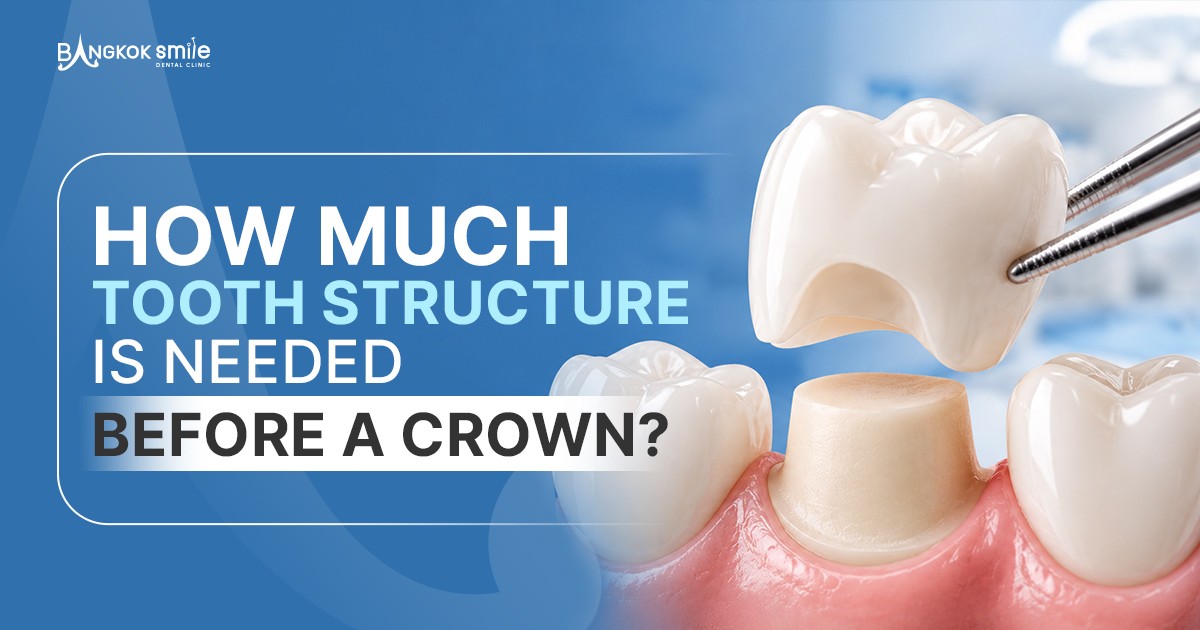
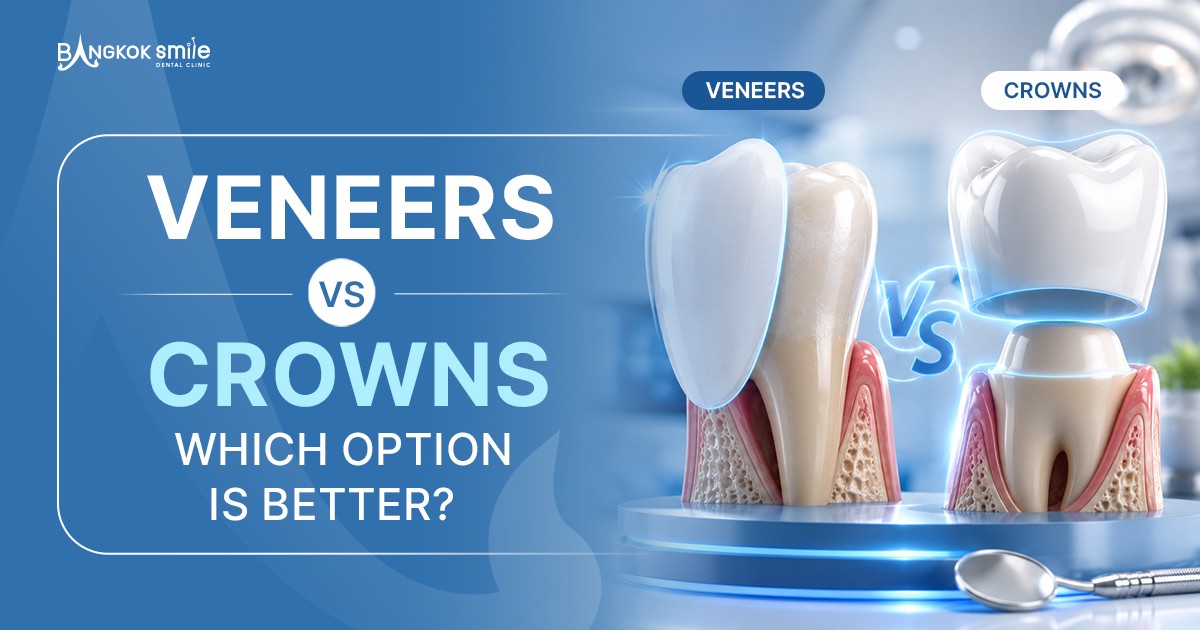
If it helps to visualize the distinction: imagine a veneer as a thin facing applied to the front of a tooth, like a new front on a cabinet, while a crown is more like a cap that covers the entire tooth, like a thimble over a fingertip. The veneer changes how the front looks while leaving most of the tooth intact; the crown encases and protects the whole tooth. This is why veneers suit cosmetic improvements on healthy teeth, where only the visible front needs changing, while crowns suit teeth that need protection all around because their structure is compromised. Holding this simple picture in mind makes the logic of the decision clearer: are you changing how a healthy tooth looks, or protecting and restoring a compromised one?
The Cost Dimension
Cost is also worth factoring into this decision, though it shouldn't be the deciding factor when a tooth genuinely needs one option over the other. Veneers and crowns are often comparable in cost per tooth, with the specific figures depending on the materials chosen and the complexity of the case, so the decision usually doesn't come down to one being dramatically cheaper than the other. Where cost does become relevant is in the broader treatment plan, since a smile makeover involving many teeth represents a significant total investment regardless of whether veneers or crowns are used. We're transparent about the cost of each option for your specific case, so you can factor it in alongside the clinical considerations.
Why Trusting the Structural Assessment Matters
The most important thing in this decision is trusting an honest structural assessment of the teeth involved, since that's what genuinely determines the right choice. A clinic that defaults to crowns when veneers would suffice removes unnecessary tooth structure; one that places veneers on teeth that need crowns leaves them vulnerable. The honest middle path, veneers for healthy teeth needing cosmetic improvement, crowns for compromised teeth needing protection, requires a genuine assessment rather than a default preference, which is exactly what we aim to provide.
Planning This Decision Around a Single Treatment Trip
For international patients planning a trip specifically for cosmetic treatment, knowing in advance whether a tooth is likely to need a veneer or a crown matters for scheduling, since the two can sometimes involve different numbers of visits or a different provisional stage before the final restoration is placed. Photos and, where possible, prior imaging shared before you travel let us flag teeth that may need the structural assessment that determines this choice, so the in-person visit can focus on confirming the plan and proceeding rather than discovering mid-treatment that a tooth needs a different approach than expected. This kind of advance planning is particularly useful when a smile makeover is likely to involve a mix of veneers and crowns, since sequencing both within a single trip requires the lab and clinical team to coordinate closely on timing from the outset. You can book a consultation at https://www.bangkoksmiledental.com/contact-us.php