 +662-105-4288
 1800 789 560



Why Does My Tooth Hurt When I Drink Cold Water?
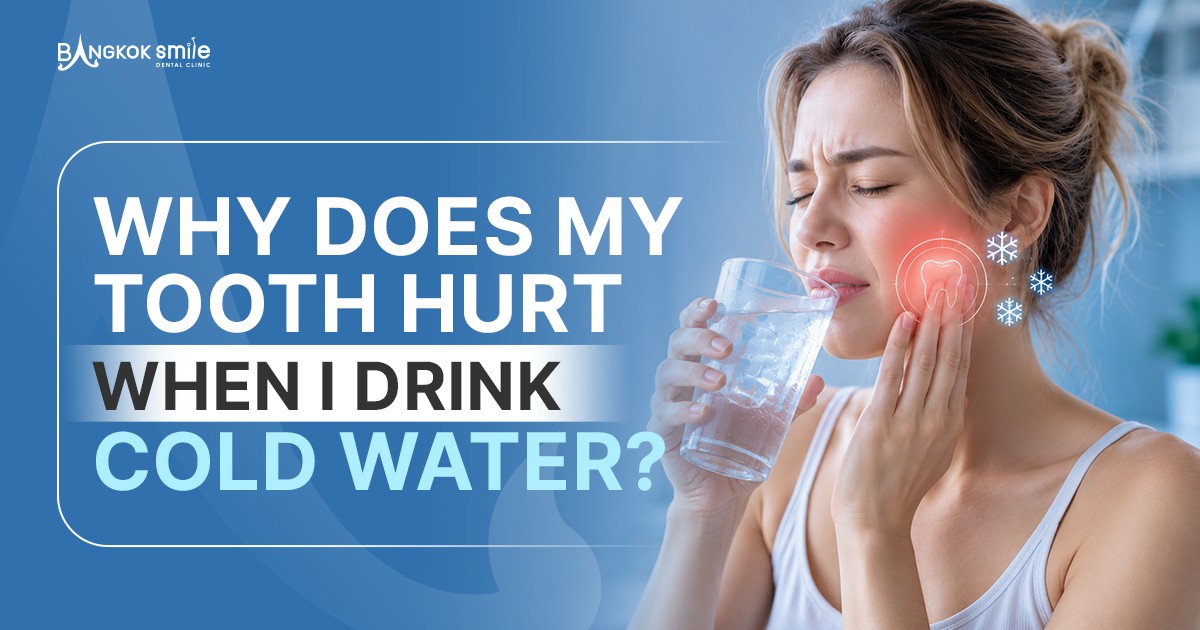
If your tooth hurts when you drink cold water, the most common causes include tooth sensitivity (dentin hypersensitivity), worn enamel, gum recession, cavities, cracked teeth, or damaged dental restorations. While temporary sensitivity is sometimes harmless, pain that lasts more than a few days should be evaluated by a dentist.
What Causes Tooth Pain When Drinking Cold Water?
Tooth sensitivity occurs when the dentin—the layer beneath the enamel—becomes exposed. Tiny microscopic tubules inside the dentin allow cold temperatures to stimulate the nerve inside the tooth.
Several dental conditions can expose dentin.
1. Worn Tooth Enamel
Enamel protects your teeth from temperature changes.
Common causes include:
- Aggressive brushing
- Acidic drinks
- Acid reflux
- Teeth grinding (Bruxism)
Once enamel wears away, cold water can easily trigger nerve pain.
2. Gum Recession
When gums recede, the tooth root becomes exposed.
Unlike the crown of your tooth, roots have no enamel protection.
Common causes include:
- Periodontal disease
- Aging
- Smoking
- Brushing too hard
3. Tooth Decay (Cavity)
A cavity creates a pathway that allows cold temperatures to reach the inner tooth.
Symptoms include:
- Cold sensitivity
- Sweet sensitivity
- Pain while chewing
- Visible holes
4. Cracked Tooth
Even microscopic cracks can expose dentin.
Signs include:
- Sharp pain when drinking cold water
- Pain when biting
- Pain that comes and goes
Many cracks cannot be seen without digital X-rays.
5. Recent Teeth Whitening
Professional whitening temporarily opens microscopic pores within enamel.
This usually resolves within several days.
6. Failing Dental Fillings, Crowns or Veneers
Old restorations can leak over time.
Cold liquids may enter tiny gaps between the restoration and the tooth, causing sensitivity.
Which Cause Is Most Likely?
Your symptoms often provide clues about the underlying cause.
When Should You See a Dentist?
You should schedule a dental examination if:
- Pain lasts longer than two or three days
- Sensitivity becomes more severe
- Only one tooth is affected
- Swelling develops
- You experience pain while chewing
- Tooth pain wakes you during the night
These symptoms may indicate a problem beyond ordinary tooth sensitivity and should be evaluated promptly.
How Dentists Diagnose Tooth Sensitivity
A professional dental examination helps determine the exact cause of cold sensitivity.
1. Clinical Examination
Your dentist may check for:
- Tooth decay
- Cracked teeth
- Gum recession
- Worn enamel
- Loose fillings
- Failing crowns
2. Digital X-Rays
Digital imaging can detect problems that are not visible during a routine examination, including:
- Hidden cavities
- Root infections
- Cracked teeth
- Bone loss
- Failed restorations
Treatment Options for Tooth Sensitivity
Treatment depends on the underlying cause.
1. Mild Tooth Sensitivity
Treatment may include:
- Desensitizing toothpaste
- Fluoride varnish
- Professional desensitizing treatments
2. Tooth Decay
Dental fillings restore damaged tooth structure and eliminate sensitivity.
3. Gum Recession
Periodontal treatment helps protect exposed tooth roots and improve gum health.
4. Cracked Teeth
Dental crowns may restore strength while reducing pain and sensitivity.
5. Infected Teeth
If the dental pulp becomes infected, root canal treatment may be recommended to remove infection while preserving the natural tooth.
Can Tooth Sensitivity Be Prevented?
Yes. Simple daily habits can help reduce your risk of tooth sensitivity.
These include:
- Brushing gently with a soft-bristled toothbrush
- Using fluoride toothpaste
- Limiting acidic foods and beverages
- Wearing a custom night guard if you grind your teeth
- Visiting your dentist every six months for routine check-ups
Frequently Asked Questions
1. Why does only one tooth hurt when I drink cold water?
Pain in a single tooth often suggests a cavity, cracked tooth, exposed root, or failing filling rather than general tooth sensitivity.
2. Can tooth sensitivity go away on its own?
Sensitivity after professional whitening may improve within a few days. However, ongoing sensitivity usually requires a dental evaluation.
3. Does tooth sensitivity always mean I need a root canal?
No. Most cases are caused by enamel wear or exposed dentin and can often be treated conservatively when diagnosed early.
4. Is tooth pain from cold an emergency?
Usually not. However, if sensitivity is accompanied by swelling, severe pain, or facial swelling, seek dental care as soon as possible.
Book a Free Online Consultation
Experiencing tooth pain when drinking cold water? Our experienced dental team can identify the cause of your sensitivity using advanced digital diagnostics and recommend the most appropriate treatment for your needs. You can book a consultation at https://www.bangkoksmiledental.com/contact-us.php